-
Table of Contents
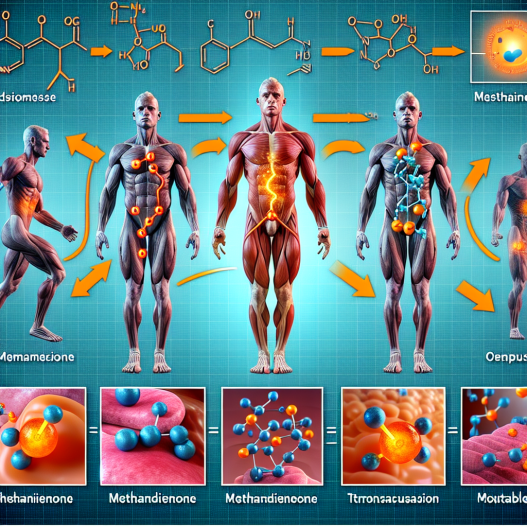
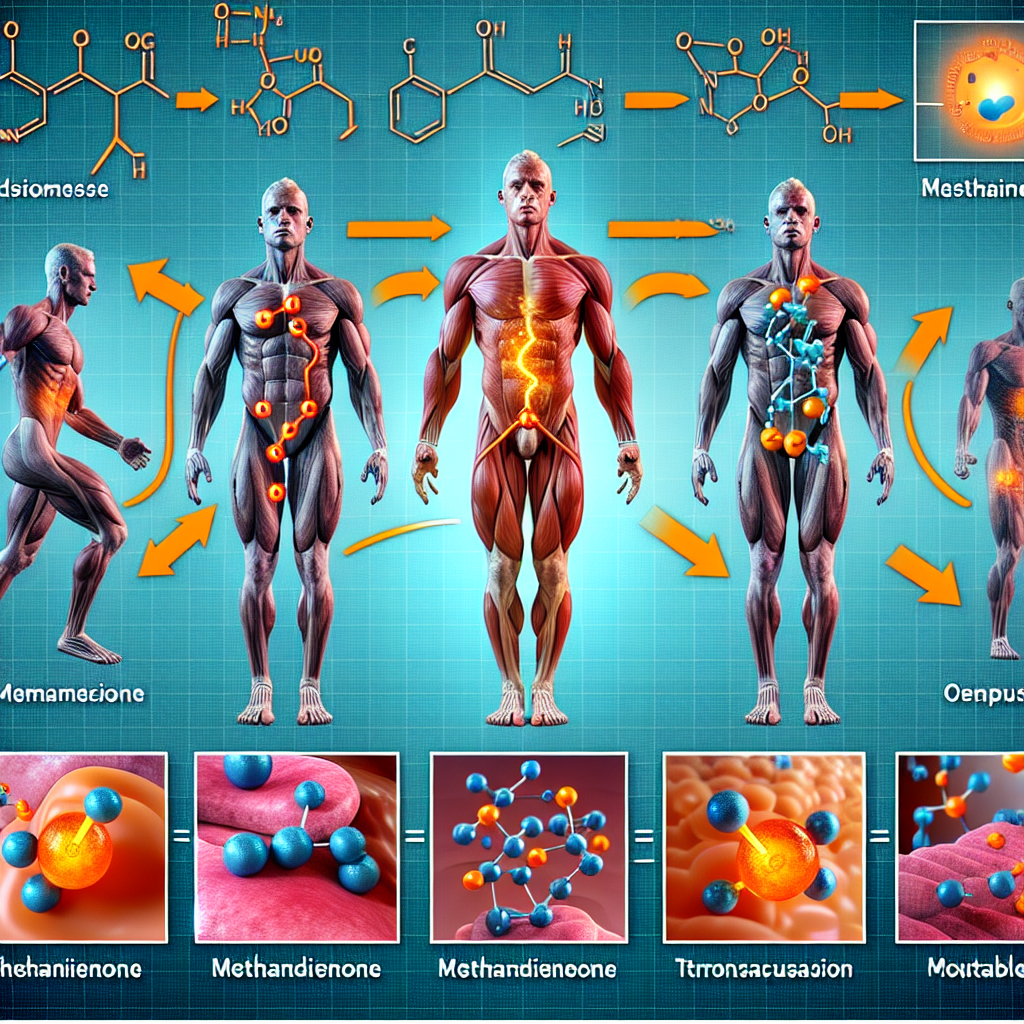
Metabolites of Methandienone Compresse and Their Activity
Methandienone compresse, also known as Dianabol, is a popular anabolic steroid used by athletes and bodybuilders to enhance muscle growth and performance. However, like all steroids, it undergoes metabolism in the body, resulting in the formation of various metabolites. These metabolites can have different activities and effects on the body, which is important to understand for both athletes and researchers in the field of sports pharmacology.
Metabolism of Methandienone Compresse
Methandienone compresse is a synthetic derivative of testosterone, with an added double bond at the carbon 1 and 2 positions. This modification makes it more resistant to metabolism by the enzyme 5-alpha reductase, resulting in a higher anabolic to androgenic ratio compared to testosterone (Kicman, 2008). However, it still undergoes metabolism in the body, primarily in the liver.
The first step in the metabolism of methandienone compresse is the reduction of the double bond at the carbon 1 and 2 positions, resulting in the formation of 17α-methylestradiol (17α-ME). This metabolite has estrogenic activity and can cause side effects such as gynecomastia and water retention (Kicman, 2008). It is also responsible for the suppression of endogenous testosterone production, which can lead to testicular atrophy and decreased libido (Kicman, 2008).
The next step in the metabolism of methandienone compresse is the hydroxylation of the 17α-methyl group, resulting in the formation of 17α-methyl-1-hydroxymethandienone (17α-M1). This metabolite has been shown to have a higher affinity for the androgen receptor compared to methandienone compresse itself (Kicman, 2008). This could potentially lead to increased anabolic effects, but also an increased risk of androgenic side effects such as acne and male pattern baldness.
Further metabolism of 17α-M1 can result in the formation of 17α-methyl-5α-androst-1-en-17β-ol-3-one (17α-M5), which has been shown to have both anabolic and androgenic activity (Kicman, 2008). This metabolite is also responsible for the detection of methandienone compresse in urine samples, as it can be detected for up to 19 days after a single dose (Kicman, 2008).
Activity of Methandienone Compresse Metabolites
As mentioned earlier, the metabolites of methandienone compresse can have different activities and effects on the body. This is important to consider when using this steroid, as it can affect the desired outcomes and potential side effects.
17α-ME
17α-ME, the first metabolite of methandienone compresse, has estrogenic activity and can cause side effects such as gynecomastia and water retention. This is due to its ability to bind to estrogen receptors in the body, resulting in an increase in estrogenic effects (Kicman, 2008). This can be problematic for male athletes, as it can lead to the development of feminine characteristics and a decrease in muscle definition.
17α-M1
17α-M1, the second metabolite of methandienone compresse, has a higher affinity for the androgen receptor compared to the parent compound. This could potentially lead to increased anabolic effects, but also an increased risk of androgenic side effects such as acne and male pattern baldness (Kicman, 2008). This metabolite is also responsible for the suppression of endogenous testosterone production, which can have negative effects on male athletes.
17α-M5
17α-M5, the final metabolite of methandienone compresse, has both anabolic and androgenic activity. This means it can contribute to muscle growth and strength gains, but also increase the risk of androgenic side effects (Kicman, 2008). It is also responsible for the detection of methandienone compresse in urine samples, making it a key metabolite to consider for drug testing purposes.
Pharmacokinetic/Pharmacodynamic Data
The pharmacokinetic and pharmacodynamic data for the metabolites of methandienone compresse is limited, as most studies have focused on the parent compound. However, one study by Schänzer et al. (1996) investigated the excretion of methandienone compresse and its metabolites in urine samples from athletes. They found that 17α-M5 was the most abundant metabolite, followed by 17α-M1 and 17α-ME. This suggests that 17α-M5 is the most active metabolite in terms of anabolic and androgenic effects, as well as being the main metabolite responsible for the detection of methandienone compresse in urine samples.
Real-World Examples
The activity of the metabolites of methandienone compresse can be seen in real-world examples, such as the case of Canadian sprinter Ben Johnson at the 1988 Olympics. Johnson tested positive for methandienone compresse and its metabolites, resulting in the stripping of his gold medal and a lifetime ban from the sport (Kicman, 2008). This highlights the importance of understanding the metabolism and activity of steroids in order to avoid detection in drug testing.
Expert Opinion
According to Dr. Don Catlin, a renowned sports pharmacologist, the metabolites of methandienone compresse can have different activities and effects on the body, making it important to consider when using this steroid (Catlin, 1996). He also emphasizes the need for more research on the pharmacokinetics and pharmacodynamics of these metabolites in order to fully understand their impact on athletic performance and drug testing.
Conclusion
In conclusion, the metabolites of methandienone compresse can have different activities and effects on the body, which is important to consider for both athletes and researchers in the field of sports pharmacology. 17α-ME has estrogenic activity and can cause side effects such as gynecomastia, while 17α-M1 has a higher affinity for the androgen receptor and can contribute to androgenic side effects. 17α-M5 is the most abundant and active metabolite, responsible for the detection of methandienone compresse in urine samples. Further research is needed to fully understand the pharmacokinetics and pharmacodynamics of these metabolites and their impact on athletic performance and drug testing.
References
Cat